Property developers in the Philippine office market have become more strategic during the first half of 2026, with many choosing to prioritize addressing their current vacancies before embarking on new projects. IT-BPM companies, still the market's main driver, are eyeing cities beyond Cebu, Davao, and Pampanga as they consider expansion outside Metro Manila, while the flexible workspace sector continues to grow amid more hybrid and remote work arrangements.
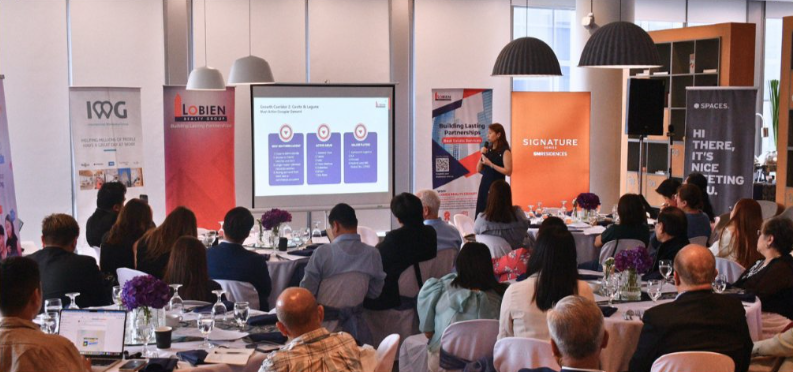
According to the analysis presented by Lobien Realty Group (LRG) during their July 9 media briefing on the office market, developers' conservative pipeline reflects a clear preference for absorption over aggressive expansion. LRG founder and CEO Sheila Lobien noted that supply in Metro Manila's Central Business Districts has dropped by more than 80 percent — total supply fell from 655,673 square meters in Q2 2025 to 326,307 square meters in Q2 2026, with Quezon City, Makati, and Taguig all posting sharp declines. Despite this pullback, demand remains evident in rising rental prices, which now average P1,000 per square meter in the CBDs, with Makati and the southern and northern parts of Metro Manila reporting the strongest rate increases.
While IT-BPM clients continue to gravitate toward Makati and Bonifacio Global City, Quezon City has been drawing its own share of demand due to affordability and proximity to universities that supply fresh talent. LRG's briefing cited IT-Business Processing Association of the Philippines data projecting the workforce could reach around 2.5 million employees by 2028, implying 150,000 to 200,000 new jobs annually — translating to an estimated close to 500,000 square meters of new office space needed in 2026 alone.
Beyond NCR, LRG's report noted demand shifting toward the Department of Information and Communications Technology's (DICT) Digital Cities in 2026, including municipalities like Batangas City, Cabanatuan City, Dagupan City, General Santos City, and Iligan City, which offer competitive setups, tax incentives, and capable provincial talent pools. Provincial business districts overall carry an 18 percent vacancy rate, with total supply also declining, led by Pampanga, Cebu, and Cavite. Alex Regala, LRG's director of sales and strategic partnership, attributed this to slower project completions amid oversupply concerns, while noting average provincial rental rates have still risen from P570 to P600 per square meter. Regala also pointed to the P9 trillion Luzon Spine Expressway Network and ongoing arterial road projects like CCLEx, NLEx, and SLEx as key infrastructure reducing inter-regional transport bottlenecks and transforming the provinces into viable business corridors.
Rounding out the report, the flexible workspace market — numbering more than 230 locations in the NCR and occupying about 600,000 square meters nationwide — is estimated to grow by 600 percent by 2030. Despite uncertainty brought about by the Middle East crisis, Lobien emphasized that real estate remains one of the top contributors to the Philippine economy, posting 6.8 percent growth, with real estate prices continuing to rise.
Read the full article here:
https://www.manilatimes.net/2026/07/21/business/real-estate-and-property/philippines-office-market-sees-strategic-shifts-rising-rental-demand-into-2026/2387939